
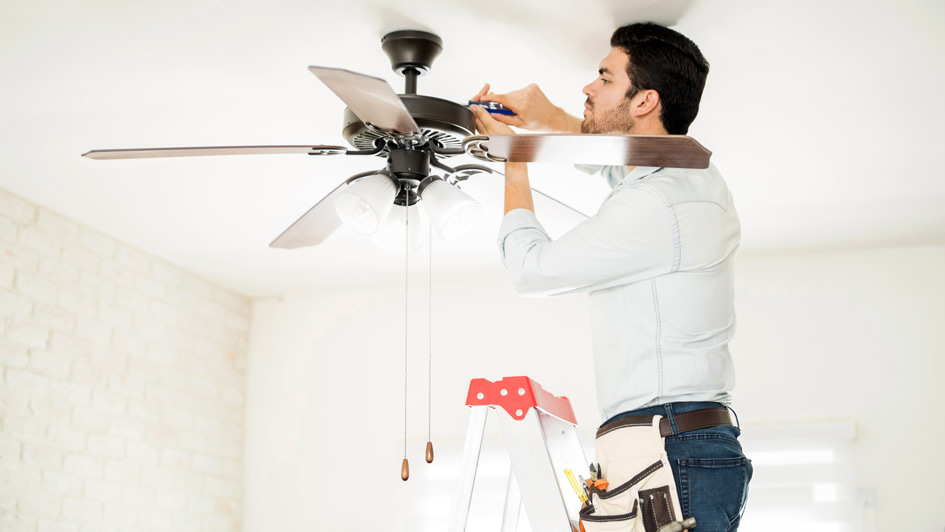
Ceiling fans are one of the most underappreciated ways to enhance comfort and cut energy costs. By boosting air circulation and supporting your HVAC system, ceiling fans and energy efficiency are truly a match made in heaven. They offer a smart, eco-friendly way to keep cool while easing strain on your AC—helping you avoid unnecessary air conditioning repair.
In this blog, the experts at Morgner Inc. Air Conditioning & Heating explain how ceiling fans can improve your comfort while increasing your HVAC efficiency. We'll also share some HVAC efficiency tips that put to good use ceiling fans.
Comfort vs. Temperature: Getting Comfortable with the Wind-Chill Effect Indoors
Ceiling fans don’t actually change the room’s temperature—they make your home more comfortable by increasing air movement across your skin. This is known as the wind-chill effect, and it can make a room feel up to 4 degrees cooler without lowering the thermostat. That means you stay comfortable and enjoy the benefits of indoor air circulation from your ceiling fan while minimizing air conditioner use—helping reduce your electric bill in summer.
The Best of Both: Benefits of Using Fans and Air Conditioning Together
There are several benefits to using ceiling fans and air conditioning at the same time, especially during the warmer months. By combining both, you boost HVAC efficiency and enjoy a cooler living space with less strain from your cooling system.
Why you should use ceiling fans and AC together:
- Ceiling fans help lower HVAC load by circulating cool air more evenly around the room. Limiting HVAC stress is important, because it can prevent a breakdown that could lead to premature AC or furnace installation.
- Using overhead fans improves your indoor comfort by reducing uneven temperatures and improving air movement.
- Running both ceiling fans and AC can reduce overall energy use. If you have a home automation system, you can even fine-tune your smart thermostat settings to set the temperature higher while your ceiling fan is running.
Clockwise vs. Counterclockwise Ceiling Fan Rotation: What Direction to Spin in Summer and Winter?
To maximize the benefits of your ceiling fans year-round, it’s important to set the blades to rotate in the right direction for the season. The direction impacts how air circulates, which can either make you feel cooler or push warm air downward so you feel warmer.
When it's best to spin ceiling fans counterclockwise
In the summer, ceiling fans should turn counterclockwise at a quick speed. This creates a breeze that pushes cool air downward, amplifying the wind-chill effect and creating a cooler sensation.
When to spin ceiling fans clockwise
In the winter, set your fan to spin clockwise on a low speed. This softly moves cold air up and circulates heated air down to where you can feel it, helping you feel warmer without changing your thermostat.
What Type of Ceiling Fan Is Best
Selecting the right ceiling fan depends on a few key factors, including blade design, airflow rating and room dimensions. First, look for fans that offer a good blend of ECFM airflow and blade pitch to ensure efficient air movement in your home:
- ECFM refers to how much air a fan circulates—the cubic feet per minute, or CFM—per watt of electricity consumed. Fans with higher ECFM are more energy efficient.
- Blade pitch is the incline of the blades. A steeper blade pitch moves more air than a shallower pitch but can also stress the fan’s motor.
Also, consider room size when sizing a ceiling fan—a fan that’s too small won’t move enough air, while one that’s too large may be overpowering for the room.
Increase Your HVAC Efficiency With the Team from Morgner Inc. Air Conditioning & Heating
At Morgner Inc. Air Conditioning & Heating, our HVAC specialists can help you maintain a cozy home while minimizing wear on your heating and cooling systems. From practical fan advice and air conditioning installation to smart thermostats and furnace repair, we offer comprehensive services that fit your lifestyle. Schedule your appointment by calling 314-310-0363 today.